Water sports · Wind and waves
Surfing, kitesurfing and paddleboarding in Martinique
Surfing, kitesurfing, windsurfing and paddleboarding do not need the same sea or wind. Choose the activity and your level first, then let a responsible school confirm the location and time from that day’s conditions.
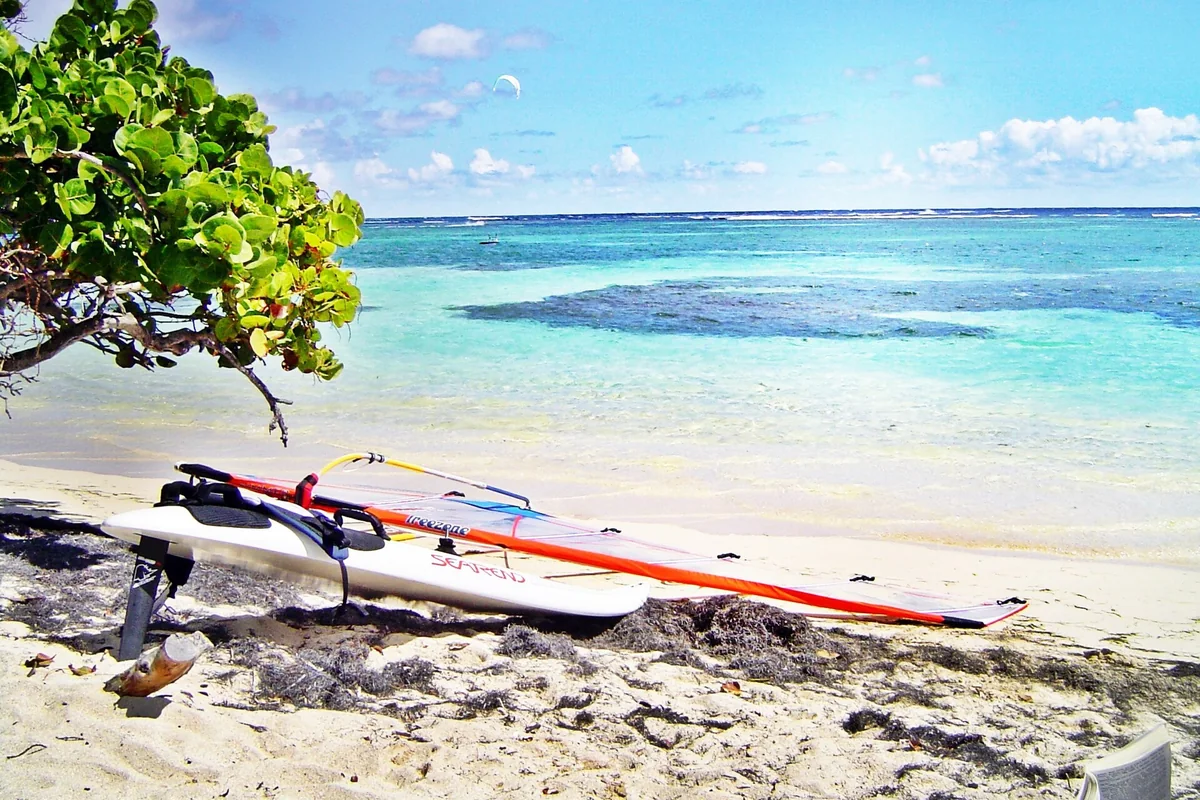
Four activities with four different needs
Surfing uses wave energy. Kitesurfing and windsurfing require wind, space and a suitable launch area. Stand-up paddleboarding usually needs more sheltered water for a first lesson. A location that works well for an independent rider can be wholly unsuitable for a beginner class.
| Activity | First question | A good sign from a school |
|---|---|---|
| Surfing | Does the break suit my level today? | the instructor moves or cancels when waves are wrong for the group |
| Kitesurfing | Do the launch area and wind allow safe teaching? | small groups and a clearly explained radio or boat procedure |
| Windsurfing | Which board and sail match the rider and wind? | equipment selected for the person rather than one rig for everyone |
| Paddleboarding | Will the route remain sheltered for the whole session? | a clear explanation of offshore wind, the return and buoyancy equipment |
Never book a vague “board-sports package” without knowing the activity, realistic water time and intended level.
Where to look for each activity
Near Tartane, Anse Bonneville — often called Plage des Surfeurs — is a reference point for Atlantic surfing. That does not make its waves suitable for a beginner every day. A school should choose the area, board and time after reading swell, wind and current.
Pointe Faula and the Le Vauclin coast bring together sailing, kite and paddle activities. Shallow water does not remove wind, reef or distance-from-shore hazards. Ask whether teaching starts from the beach, a boat or another location.
Anse Michel appears in the official Martinique beach guide as an area for board sports. It is also used for swimming and walking, so riders must follow the indicated zones and respect other visitors.
Use the Martinique Tourism Committee’s water-sports directory to identify schools. A listing is a starting point, not proof that the activity, instructor or time shown online is available now.
Beginners should choose teaching, not a famous spot
State your age, swimming confidence, experience and relevant medical limitations. For a child, ask for the provider’s age or weight threshold and the equipment genuinely available. Someone independent in another board sport remains a kite beginner without experience of kite safety systems.
Before paying, ask for:
- the instructor’s qualification and the operator’s insurance;
- participants per instructor;
- protective equipment and the leash appropriate to the activity;
- time allocated to preparation, theory and actual water practice;
- a fallback spot if wind or waves change;
- rescheduling or refund conditions;
- what happens if the stated level does not fit conditions.
A school prepared to offer a different time or board may be more reassuring than one promising to run at any cost.
Read wind and sea without pretending to forecast
Check the Météo-France Martinique coastal forecast and warnings, then let the professional apply them to the spot. A general wind speed does not describe gusts, obstacles, direction relative to shore or swell.
Offshore wind can move a paddleboard or rig away quickly. Tides, reef and currents change usable areas. If renting without instruction, ask for geographic boundaries, the assistance procedure, a contact number and return time.
Independent rental: show ability through good decisions
A responsible rental provider may refuse equipment when ability or conditions do not match. Describe your recent experience honestly. Inspect the board, fittings, rig or kite before departure and record defects. Ask who monitors your return and what the insurance covers.
For paddleboarding, wear the required buoyancy equipment and use the leash type recommended for the environment; the wrong leash can itself create risk in current. In kite or windsurfing, never cross a swimming area merely to shorten the route.
Share the coast
Beaches are not exclusive sports grounds. Follow channels and signs and respect swimmers, fishers and other schools. Leave generous room when rigging a kite and never stretch lines across a public route.
Avoid standing on seagrass or reef, leave no broken equipment and never chase turtles or birds. For a paddle trip in mangroves, read the mangrove kayaking guide, because access rules and fragile channels change the decision.
Build a coherent day
A lesson is more tiring than photographs suggest. Do not place another fixed, physical activity immediately after a long drive. At Tartane, pair it with a short walk or the village rather than crossing to the south. From Le Vauclin or Sainte-Anne, stay in the south-east.
Prepare an option that does not depend on wind: a market, distillery, garden or heritage visit. If board sports are a trip priority, compare areas in the where-to-stay guide before booking across the island.
Check on the morning of the lesson
- Confirm the spot and meeting point, which may differ from the school address.
- Ask whether the session is running and on which type of board.
- Read the marine forecast and warnings again.
- Bring water, sun protection, a UV layer and dry clothes.
- Report any change in health or swimming confidence.
- Accept a postponement: unsuitable conditions do not improve because a lesson is paid for.
Useful points on the ground
Addresses and maps
Anse Bonneville, also called Plage des Surfeurs
La TrinitéMartiniqueA surfing reference point near Tartane; a school must assess waves, currents and beginner-suitable areas on the day.
Pointe Faula
Le VauclinMartiniqueAn area associated with sailing sports; confirm the exact teaching zone, wind and water depth with the provider.
Anse Michel
Sainte-AnneMartiniqueA south-eastern beach associated with board sports, where swimmers, kites and other users must share the space.