Below the surface
Scuba diving in Martinique: areas, experience and choosing a centre
Diving in Martinique is not a ranking of sites. The Caribbean-north wrecks, south-west formations and trips towards Le Diamant require different experience. Choose an area and a centre able to adapt the site to the day.
First choose the type of diving
Before comparing site names, establish what you really want to do: an introductory dive with no certification, a refresher after a long break, a course, a recreational dive suited to your qualification, or technical diving. The same boat will not necessarily suit all five aims.
The Comité Martiniquais du Tourisme diving page introduces the main areas and links to centres. Use it to make a shortlist, then contact each operation directly. Commercial descriptions, times and availability can change.
| Your situation | What a good centre should provide | The decisive question |
|---|---|---|
| first introductory dive | calm briefing, close supervision and a sheltered site | “Is today’s entry suitable for a complete beginner?” |
| certified but out of practice | refresher and a progressive site | “What do you offer after a long period without diving?” |
| regular diver | a group of comparable ability and a choice based on the sea | “How do you decide the site and group?” |
| family with non-divers | clear logistics for companions | “Can they remain ashore or board, and under what conditions?” |
| a wreck or Le Diamant objective | genuinely compatible qualification and experience | “What is the fallback if this site is not reasonable today?” |
Saint-Pierre: history before performance
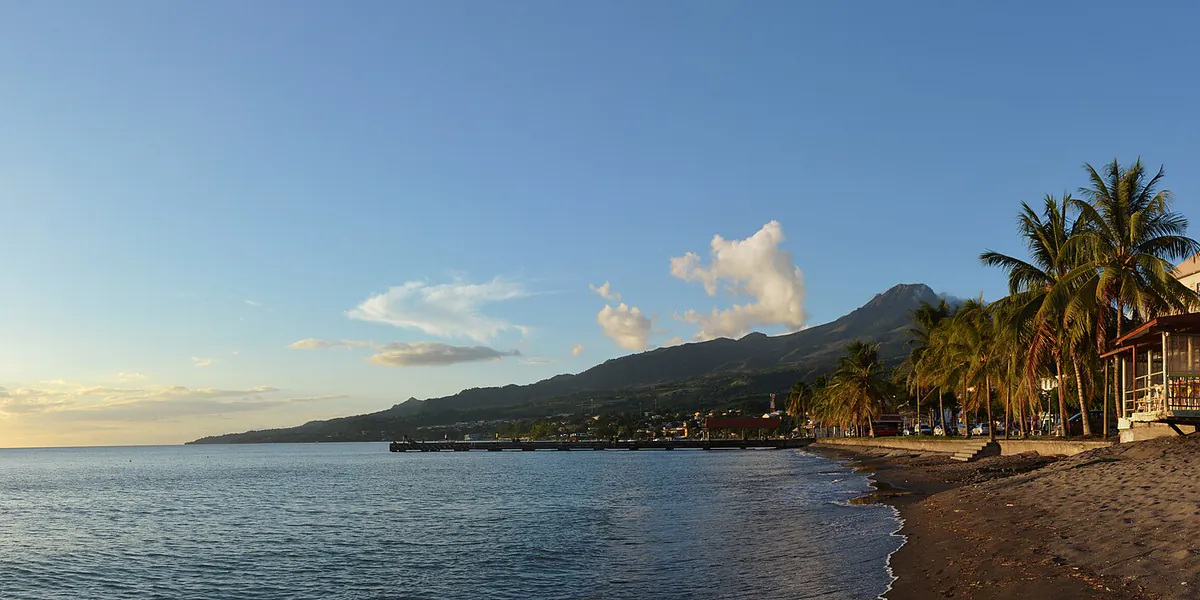
Saint-Pierre bay is associated with vessels sunk during the volcanic catastrophe of 1902 and with other wrecks. That history is a reason to choose a centre able to explain what you see, rather than one merely advertising a depth or famous name.
Not every wreck suits the same diver. Depth, condition, current and visibility lead to different decisions. Do not press a centre to confirm a site before it has seen your certification, recent experience and the conditions. Substituting a reef or less demanding dive demonstrates good management; it is not an inferior service.
The Pothuau area at Le Carbet has mooring buoys intended to reduce anchoring impact. The marine park explains how they are used and the ban on anchoring away from a buoy within the zone. This gives you a concrete way to ask an operator about its practice.
Les Anses-d’Arlet: flexibility for learning or returning
The south-west has coves used for snorkelling, introductory dives, training and boat departures. Grande Anse d’Arlet is a practical base, while the main town, Anse Dufour and other areas offer different configurations.
That variety does not make a site easy every day. Wind, swell, boat traffic and visibility still decide. The official Les Anses-d’Arlet marking plan sets out navigation, anchoring and underwater-activity rules. The dive supervisor must account for this framework and the markers on site.
For an introductory dive, compare the quality of the briefing, the time allowed to put equipment on and proximity of the instructor. A promised number of fish or turtle photograph says nothing about the quality of instruction.
Diamond Rock: a boat trip, not a box to tick
Diamond Rock lies offshore. The crossing, water entry, exposure and dive profile must suit the group. A serious centre may replace this destination when the sea does not permit a satisfactory trip.
Ask whether the final decision is made that morning, which fallback site is considered and how the provider supports somebody prone to seasickness. Do not pay just for the name “Diamond”; pay for an operation that knows when to say no.
Check the centre before booking
Ask these questions in writing to prevent misunderstandings:
- Which certification and recent experience do you require for the intended trip?
- Which documents, insurance or medical certificate might my circumstances require?
- Is equipment included, and how do you select wetsuit, BCD and fin sizes?
- How many divers does each instructor or guide supervise at each ability level?
- Where exactly is the meeting point, and must participants carry equipment to the boat?
- What happens if weather requires another site, postponement or cancellation?
- How does the centre protect seagrass and coral during mooring and entry?
- What option exists for a non-diving companion?
A precise answer matters more than a ranking or review count. If your health, medication, pregnancy, recent surgery, or a cardiac or respiratory issue could affect diving, disclose it before paying. Only a competent professional can tell you which evidence and adaptations are needed.
The day before and morning of the dive
Check the Météo-France marine forecast and Martinique warning level. Do not try to impose your interpretation on the centre: its responsible person has local information and remains in charge of the operational decision.
Sleep sufficiently, hydrate and avoid alcohol and intense exercise before diving. Bring sun protection, water and dry clothing for the boat. If you need to fly, gain altitude or undertake another strenuous activity after the dive, ask the centre which interval fits your profile and dives; do not apply a random rule read online.
Underwater: watch without leaving a trace
- Establish neutral buoyancy before approaching a formation; a poorly balanced diver can damage the bottom unintentionally.
- Secure your pressure gauge, alternate regulator and accessories so they do not trail across coral.
- Do not touch, feed or move any animal.
- Never hold onto a wreck or coral for a photograph.
- Follow instructions about wreck penetration; never pass through an opening merely because another diver does.
- Keep enough distance for wildlife to continue its normal behaviour.
- Remove no object, even if it looks abandoned or worthless.
Visibility, temperature and wildlife change. No centre can guarantee a turtle, school of fish or particular photograph. A calm, well-run dive remains successful without a spectacular encounter.
Diving or snorkelling?
Choose snorkelling if you want to remain independent at the surface, have a clearly suitable area and can assess the return. Choose an introductory dive if you want to breathe underwater with close supervision. A snorkelling boat trip is not automatically easier: boarding, current and sea state may make it demanding.
For Anse Dufour and turtle-watching rules, read our responsible encounter guide. A less confident swimmer must tell the guide and use a suitable buoyancy aid rather than relying on a foam noodle or inflatable toy.
Choose your base
If diving on several days, staying near the centre simplifies early meetings and limits driving after a tiring trip. Saint-Pierre suits a north-and-wreck itinerary; Les Anses-d’Arlet and the south-west make sense for reefs and beaches. If diving takes only one day, keep a base that fits the rest of the holiday. The where to stay in Martinique guide compares these areas without pretending one suits everyone.
Useful points on the ground
Addresses and maps
Saint-Pierre
Saint-PierreFranceAn area known for maritime history and wrecks; the centre must select a site compatible with your qualification.
Grande Anse d'Arlet
Les Anses-d'ArletFranceA south-west base for first dives, courses and boat trips; confirm the exact boarding point.
Le Diamant
Le DiamantFranceDives around the rock involve a boat and remain subject to sea conditions, experience and the dive supervisor's decision.