Crops · Skills · Traceability
Coffee and cocoa in Martinique: understand, visit and taste
Coffee and cocoa in Martinique are not one plantation-museum story. They are small, rebuilding supply chains with different growers, processors and interpretation sites.
Coffee and cocoa hold a much larger place in Martinique’s popular image than their visible volume on shop shelves might suggest. Both crops have a long history shaped by the colonial economy and slavery, followed by disease, cyclones, changing markets and the dominance of other crops. Projects today are rebuilding high-quality local supply chains. That does not make every chocolate bar or coffee packet sold on the island locally grown.
For visitors, there are therefore two useful goals: understand the transformation from fruit to finished product, then verify the actual origin of what you taste or buy.
Two plants and two chains of work
| Stage | Coffee | Cocoa | What a visitor can ask |
|---|---|---|---|
| Growing | Coffee trees carry cherries harvested when ripe | Cacao trees carry pods containing beans and pulp | Where is the plot, and which variety is grown? |
| After harvest | Pulp removal or drying, process-dependent fermentation, sorting | Bean fermentation followed by drying | Does this stage take place in Martinique? |
| Processing | Roasting and grinding | Roasting, grinding, conching and recipe formulation | Is this made here from local or imported beans? |
| Tasting | Brewing according to grind, dose and water | Bar, drink, paste or nibs | Can two batches be compared without masking sugar or flavouring? |
A roasting demonstration does not prove that the coffee grew on the island. A local chocolate maker may make excellent chocolate from imported beans. Neither model is misleading when clearly explained; simply ask which stages are Martinican.
Why is Martinique coffee described as legendary?
Coffee reached Martinique in the early eighteenth century. Accounts commonly highlight Gabriel de Clieu and the spread of arabica plants through the Caribbean. Institutional sources do not all give the same exact year; the important context is that the crop became significant before declining sharply.
The French Ministry of Agriculture describes coffee and cocoa as historic crops now re-emerging in Martinique. Agricultural and customs data nevertheless point to sectors far smaller than banana, sugar cane or rum. This is the useful frame for shoppers: a bar or packet sold on the island is not automatically made from locally grown raw material.
Quality depends on bean origin, but also soil, humidity, harvesting, fermentation, drying and processing. Do not look for one “official” flavour of Martinican coffee or cocoa. Compare an identified batch and ask about the harvest, roast or processing and the grower’s name.
Cocoa: begin with a place that explains the supply chain
The Maison du Cacao Martinique — Valcaco in Le Lorrain is presented by the Martinique Tourism Committee as a venue combining museum displays, workshops, tasting, exhibitions and a shop, created through efforts to structure the sector. Its listing is a starting point, not a guarantee of a permanent programme.
Before crossing the island, contact the venue and ask:
- whether the visit is self-guided, guided or reservation-only;
- which cultivation and processing stages are demonstrated that day;
- whether visitors can access a plot or see living plants;
- which languages, age limits and accessibility conditions apply;
- whether tastings contain milk, tree nuts, peanuts, gluten or alcohol;
- which products use cocoa grown in Martinique and how the batch is identified.
Do not treat “cocoa house”, farm and chocolate workshop as synonyms. One venue may combine several functions, but confirmation must come from the venue itself.
How to read a chocolate bar or coffee packet
On a chocolate bar
Look separately for the origin of the beans, place of manufacture, ingredient list and cocoa percentage. “Made in Martinique” normally describes manufacture, not necessarily cultivation. “Martinican chocolate” is still too vague without a more precise origin.
A bar made with local cocoa may name a grower, municipality, plot or batch. Ask whether the brand works directly with growers and can explain fermentation and drying. A traceable answer is better evidence than tropical packaging.
On a coffee packet
Again, separate the origin of the green coffee from the place of roasting. Look for:
- species and variety, if stated;
- growing area or producer;
- harvest or batch;
- roasting date;
- whole bean or pre-ground coffee;
- recommended brewing method.
A rare coffee will not necessarily be available throughout the year. If a seller claims a local origin, ask politely about traceability without expecting a free tasting or photographing internal records.
Make a tasting informative
Taste before trying to identify prescribed flavour notes. For coffee, compare two preparations as they cool; for chocolate, let a small piece melt and distinguish texture, acidity, bitterness, sweetness and finish. Water and sugar between samples can hide the differences.
For a group, check allergies before the tasting. “Pure cocoa” does not mean a workshop is free from milk or nuts. A pregnant visitor, child or anyone avoiding alcohol should also know whether a ganache, syrup or pairing contains rum.
Do not erase plantation history
Any coffee and cocoa story should include the people who were forced to grow, harvest and process the crops. Colonial habitation economies depended on slavery; telling only the adventure of a European introducer or the life of a property owner leaves the history incomplete.
At a museum or habitation, ask concrete questions: who owned the land, who performed the work, how tasks were organised, which archives preserve people’s names and what happened to the estate after abolition? You can appreciate a beautiful garden without turning the violence of its economic system into scenery.
A northern day without inventing a “plantation trail”
There is not necessarily a continuous public route linking several coffee and cocoa farms. Instead, build the day around one confirmed venue, then add an open market, landscape stop or heritage visit.
- Confirm the Le Lorrain visit or your chosen producer.
- Leave enough time for roads that often take longer than their distance suggests.
- Buy only after understanding origin, storage and transport.
- Add an independent cultural or natural stop without entering farmland that is not open to visitors.
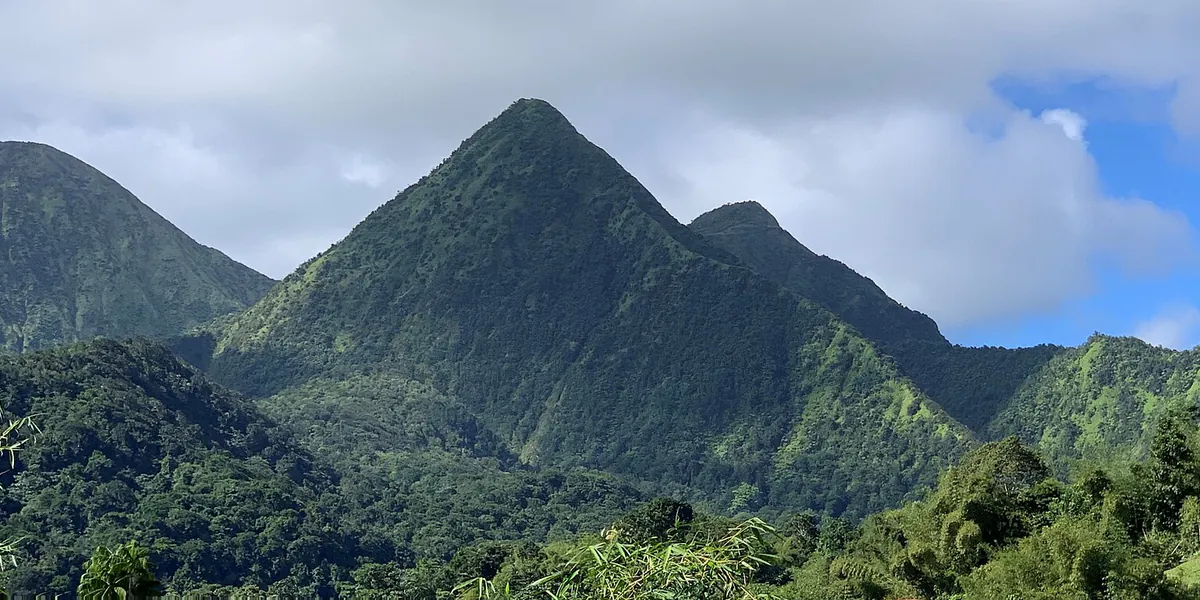
The lead image shows protected humid forest, not a cultivated plot. Similarly, lush roadside vegetation is not permission to enter land or pick a cacao pod. If you want several days in this part of the island, use where to stay in Martinique to choose a practical base.
Store purchases in a hot climate
Ask the maker about suitable storage temperature and duration. A sun-heated car quickly damages chocolate, aroma and texture. Keep products in the air-conditioned passenger compartment rather than a hot boot, then in a dry, stable place. Avoid repeated fridge-to-heat changes that cause condensation.
Keep coffee tightly sealed and away from light and odours. Do not buy a large quantity of ground coffee without knowing how you will brew it. Also check your destination’s customs rules for any unprocessed agricultural product.
Sources and direct checks
- French Ministry of Agriculture — Martinique, a land of agriculture
- Martinique Tourism Committee — Maison du Cacao Martinique, Valcaco
Confirm directly: public access, reservations, workshop content, origin of beans, allergens, price and stock. An old tourism listing does not replace the producer’s current answer.
Useful points on the ground
Addresses and maps
Maison du Cacao Martinique — Valcaco
258 route de Macédoine97214 Le LorrainMartiniqueThe Martinique Tourism Committee lists this venue; confirm reservations, visit content, accessibility and opening arrangements directly before travelling.